
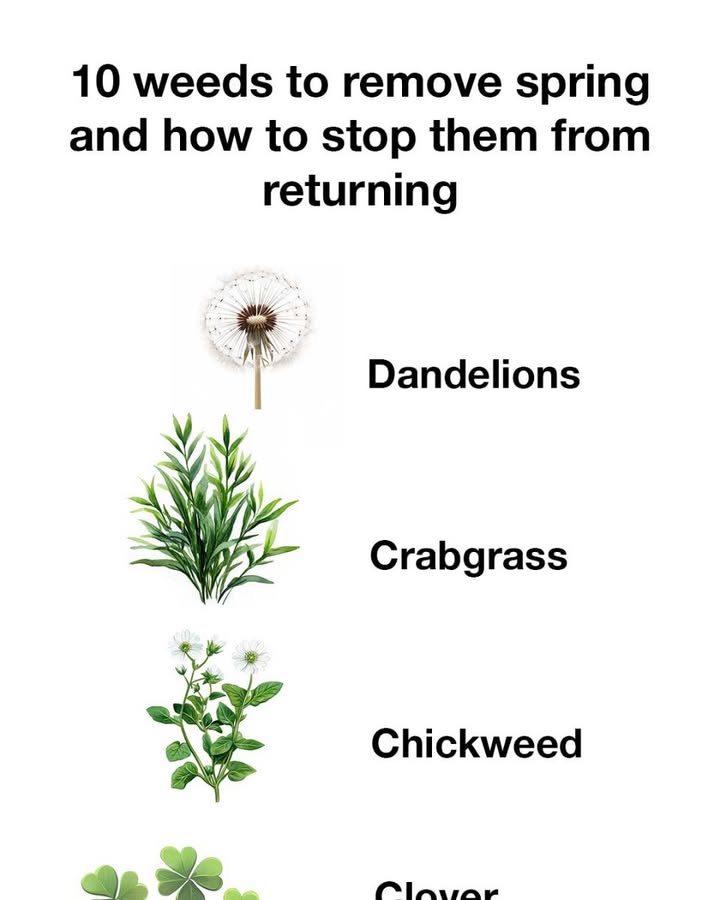
🌱 10 Common Spring Weeds to Remove—And How to Stop Them from Coming Back
Spring brings blooming flowers, fresh grass, and unfortunately… weeds. As your garden and lawn wake up from winter, invasive weeds take the opportunity to spread fast, steal nutrients, and outcompete your desired plants. But with the right timing and strategy, you can stop them before they take over.
Here are 10 of the most common spring weeds you should remove immediately—plus smart, effective tips to keep them from returning.
🌿 1. Dandelion
Why remove it: Dandelions may look cheerful, but their deep taproots make them stubborn and invasive. One plant can produce thousands of seeds.
How to stop it:
Pull out the entire taproot using a weeding fork.
Apply a thick layer of mulch or pre-emergent herbicide in early spring.
🌿 2. Crabgrass
Why remove it: This grassy weed thrives in thin or stressed lawns and spreads rapidly, choking out healthy grass.
How to stop it:
Apply pre-emergent crabgrass preventer in early spring (before soil hits 55°F).
Mow high and fertilize properly to keep your lawn thick and competitive.
🌿 3. Chickweed
Why remove it: This low-growing weed forms dense mats and can smother young plants.
How to stop it:
Hand-pull early, before it goes to seed.
Improve drainage and reduce bare soil patches with ground cover.
🌿 4. Henbit
Why remove it: This purple-flowered weed spreads quickly in disturbed areas and gardens.
How to stop it:
Use a hoe or pull it up after a rain.
Maintain healthy soil and mulch garden beds to reduce open spaces.
🌿 5. Clover
Why remove it: Though some people like clover, it competes with turfgrass and can spread aggressively.
How to stop it:
Maintain proper nitrogen levels (clover thrives in nitrogen-poor soil).
Spot-treat with natural or selective herbicides if needed.
🌿 6. Purslane
Why remove it: This succulent-looking weed spreads low to the ground and grows quickly in sunny areas.
How to stop it:
Remove before flowering to prevent seed spread.
Use a pre-emergent and ensure mulch is at least 2–3 inches deep.
🌿 7. Thistle
Why remove it: Painful to touch, thistle has spiny leaves and strong roots that regenerate easily.
How to stop it:
Dig deeply to remove all root parts.
Apply a targeted herbicide if regrowth occurs.
🌿 8. Bindweed
Why remove it: This vining weed wraps around plants and fences, strangling everything in its path.
How to stop it:
Regularly pull new growth or smother with a thick mulch barrier.
Persistence is key—this one may take repeated efforts.
🌿 9. Lamb’s Quarters
Why remove it: This weed grows tall quickly and competes aggressively with garden veggies.
How to stop it:
Pull when young—before it seeds.
Rotate crops and plant ground covers to reduce open soil space.
🌿 10. Spurge
Why remove it: This low-growing weed produces a milky sap and spreads by seed rapidly.
How to stop it:
For Complete Cooking STEPS Please Head On Over To Next Page Or Open button (>) and don’t forget to SHARE with your Facebook friends
ADVERTISEMENT
