
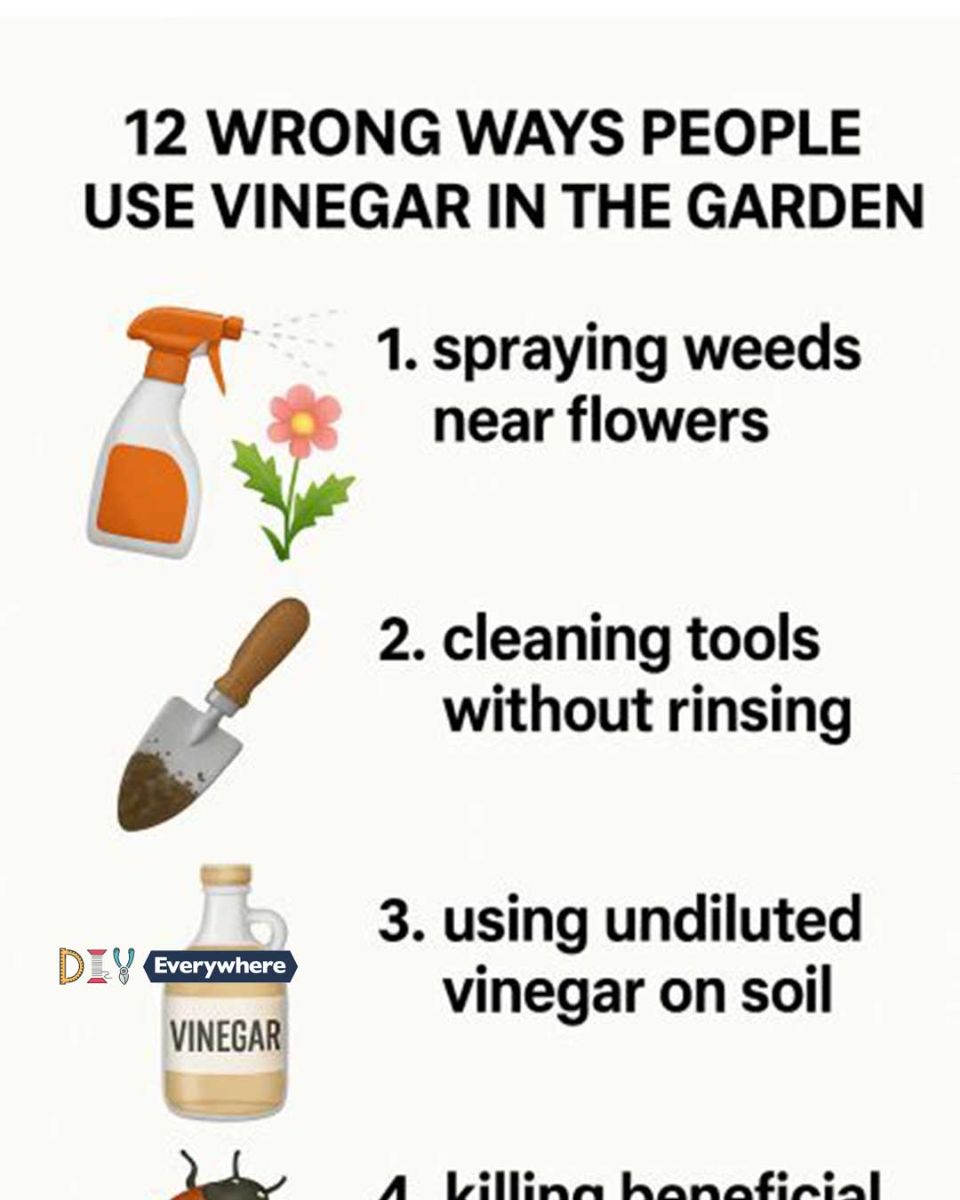
12 Wrong Ways People Use Vinegar in the Garden
Vinegar has long been hailed as a natural, non-toxic alternative to chemical garden products. It’s affordable, accessible, and versatile — making it a go-to for DIY gardeners. But while vinegar has its place in the garden, it’s not always the miracle solution it’s made out to be.
In fact, misusing vinegar can do more harm than good. Here are 12 common ways people use vinegar incorrectly in the garden — and what you should do instead.
1. Using Vinegar as a Weed Killer Near Desirable Plants
Yes, vinegar can kill weeds — but it’s non-selective. That means it kills anything it touches, including your flowers, vegetables, or lawn. A windy day or careless spray can spell disaster for nearby plants.
Tip: Apply vinegar directly to weeds with a brush or sponge to minimize drift.
2. Pouring Vinegar into the Soil to Kill Weeds
Some gardeners pour vinegar straight into the soil, hoping to kill roots. However, vinegar only affects the surface. Plus, it can disrupt soil pH and kill beneficial microbes.
Tip: For deep-rooted weeds, consider manual removal or targeted herbicides designed for the job.
3. Using Vinegar as a Long-Term Weed Solution
Vinegar provides only a temporary fix. It damages the top of the plant but often leaves the root system intact, especially in perennial weeds like dandelions.
Tip: Combine vinegar treatment with hand-pulling or repeat applications for better results.
4. Spraying Vinegar on Insects
While vinegar can repel some pests like ants, it’s not an effective insecticide and won’t kill most garden pests. In fact, it can damage leaves and harm beneficial insects like bees and ladybugs.
Tip: Use pest-specific organic solutions like neem oil or insecticidal soap.
5. Using Vinegar to Acidify Soil
Though vinegar is acidic, its effects on soil pH are temporary and inconsistent. Constant use can harm plants by disturbing soil chemistry.
Tip: For acidic-loving plants (like blueberries), use elemental sulfur or peat moss for safe, long-term results.
6. Cleaning Garden Tools with Vinegar and Not Rinsing
Vinegar is great for dissolving rust, but if you don’t rinse and dry tools after cleaning, the acid can corrode metal over time.
Tip: Always rinse tools thoroughly and oil them afterward to prevent rust.
7. Using Vinegar to Deter Cats or Animals
Some people spray vinegar around the garden to repel cats, dogs, or rabbits. While the smell may deter them temporarily, it fades quickly and requires frequent reapplication.
Tip: Try motion-activated sprinklers, fencing, or natural repellents that last longer.
8. Applying Vinegar to Kill Fungus or Mold
Vinegar has antifungal properties, but it’s often too harsh for delicate plants and can cause leaf burn.
Tip: Use a diluted baking soda or hydrogen peroxide solution for treating fungal infections safely.
9. Spraying Vinegar on Moss
Vinegar may kill moss on surfaces like patios, but using it on moss in lawns or garden beds can damage grass and other plants.
Tip: Improve drainage and sunlight exposure, or use a moss-specific lawn treatment instead.
10. Using Vinegar on Compost to Speed It Up
Adding vinegar to compost can lower the pH too much, harming beneficial microbes and slowing decomposition.
Tip: Compost thrives in a slightly acidic to neutral environment. Instead of vinegar, use green materials (like grass clippings) to heat up your pile.
For Complete Cooking STEPS Please Head On Over To Next Page Or Open button (>) and don’t forget to SHARE with your Facebook friends
ADVERTISEMENT
