
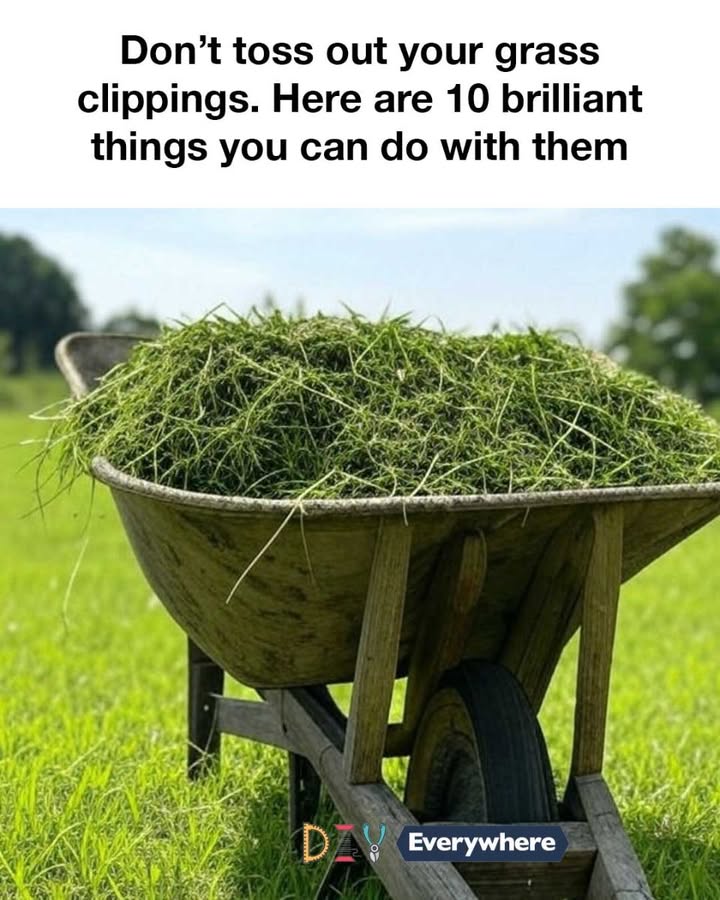
Don’t Toss Out Your Grass Clippings — Here Are 10 Brilliant Things You Can Do With Them
After mowing the lawn, it’s tempting to just bag up those grass clippings and toss them to the curb. But stop right there — you might be throwing away one of the most valuable resources your yard can produce.
Grass clippings are packed with nutrients, organic matter, and moisture. When used the right way, they can save you money, improve your soil, and even help your garden thrive — all without buying a thing.
Here are 10 brilliant ways to use your grass clippings instead of sending them to the landfill.
1. Leave Them on the Lawn (Mulching)
This is known as grasscycling, and it’s the simplest thing you can do. Grass clippings left on the lawn break down quickly and return vital nutrients — especially nitrogen — to the soil. It’s like giving your lawn free fertilizer every time you mow.
Bonus: It reduces watering needs and helps prevent thatch buildup.
2. Add to Your Compost Pile
Grass clippings are considered a “green” compost material — rich in nitrogen and perfect for balancing out “browns” like dried leaves, paper, or wood shavings. Add clippings in thin layers to avoid matting, and mix well with carbon-rich materials.
3. Use as Garden Mulch
Spread dried grass clippings around flower beds, vegetable gardens, or shrubs to help:
Retain moisture
Suppress weeds
Regulate soil temperature
Slowly release nutrients as they break down
Just make sure the grass hasn’t been treated with herbicides or pesticides.
4. Feed Your Compost Worms
If you have a worm bin, small amounts of grass clippings can provide a nitrogen boost. Worms love the tender greens — just mix them with shredded paper or cardboard to keep the balance right and avoid overheating the bin.
5. Make Liquid Lawn Fertilizer
Soak a bucket of grass clippings in water for 3–5 days, then strain and dilute the liquid 1:1 with water. You’ve now got a nutrient-rich “grass tea” that can be used to feed your lawn or garden naturally.
6. Use as Pathway Cover
Lay down cardboard or newspaper as a weed barrier in garden paths, then top with dried grass clippings. It’s an effective, natural ground cover that’s gentle on bare feet and breaks down over time.
7. Create Raised Bed Layers (Lasagna Gardening)
Building a raised bed or new garden? Grass clippings are perfect for the “green” layers in lasagna gardening — a no-dig, compost-in-place method that creates rich, fertile soil from stacked organic layers.
8. Improve Clay Soil
Mix grass clippings into heavy clay soil along with compost and sand to help break it up and improve drainage over time. This adds organic matter and encourages beneficial microbial life.
9. Make DIY Compost “Bricks”
If you’re feeling crafty, you can compress dried clippings into molds or containers and let them dry to form small “compost bricks” — easy to store and use later in compost piles or as fuel in outdoor burners (yes, really).
For Complete Cooking STEPS Please Head On Over To Next Page Or Open button (>) and don’t forget to SHARE with your Facebook friends
ADVERTISEMENT
