
5. Soil pH Impacts More Than Color
While many gardeners know soil pH affects hydrangea bloom color (acidic soil = blue flowers, alkaline = pink), few realize that extreme pH imbalances can stress the plant.
Aim for a pH between 5.5–6.5 for healthy growth. Use a soil test kit to find out where your soil stands, and amend accordingly with lime (to raise pH) or sulfur (to lower it).
6. Poor Drainage = Root Rot
Hydrangeas don’t tolerate standing water. If your plant sits in a soggy spot, its roots can rot, leading to yellowing, wilting, and eventual dieback.
Revive strategy: If drainage is poor, lift the plant and amend the soil with organic matter, or transplant to a raised bed or slope.
7. Pests and Diseases
Watch for:
Aphids (sticky residue, curled leaves)
Spider mites (webbing, speckled leaves)
Powdery mildew (white coating on leaves)
Fix: Spray with neem oil or insecticidal soap. For fungal problems, prune for better airflow and avoid overhead watering.
Final Tip: Don’t Give Up Too Soon
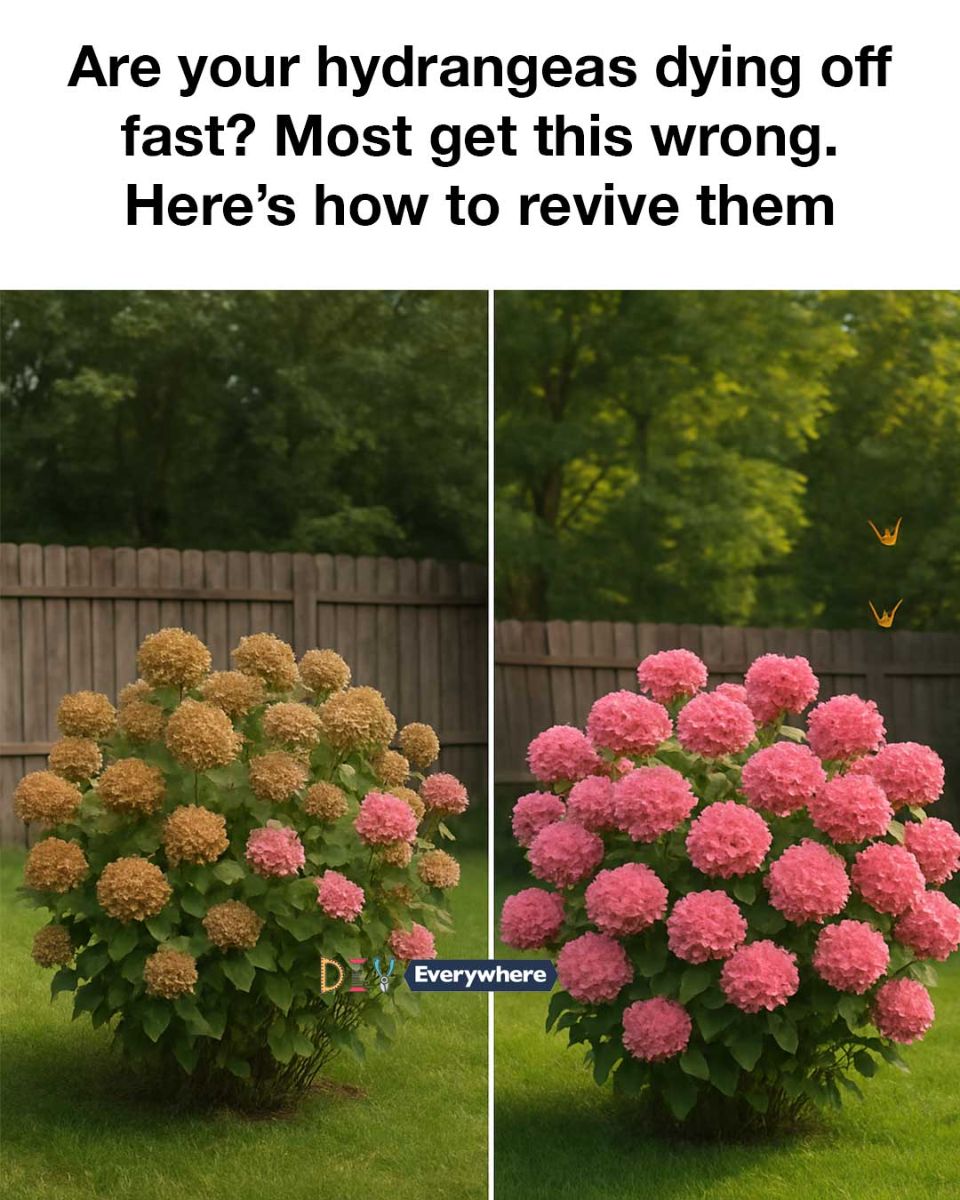
Hydrangeas are resilient. Even if they look sad now, proper care can bring them back within a season. Focus on watering, placement, and pruning timing, and your hydrangeas will reward you with beautiful blooms year after year.
Have you made any of these hydrangea mistakes? Try these fixes and let us know how your garden turns around! 🌸
ADVERTISEMENT
