
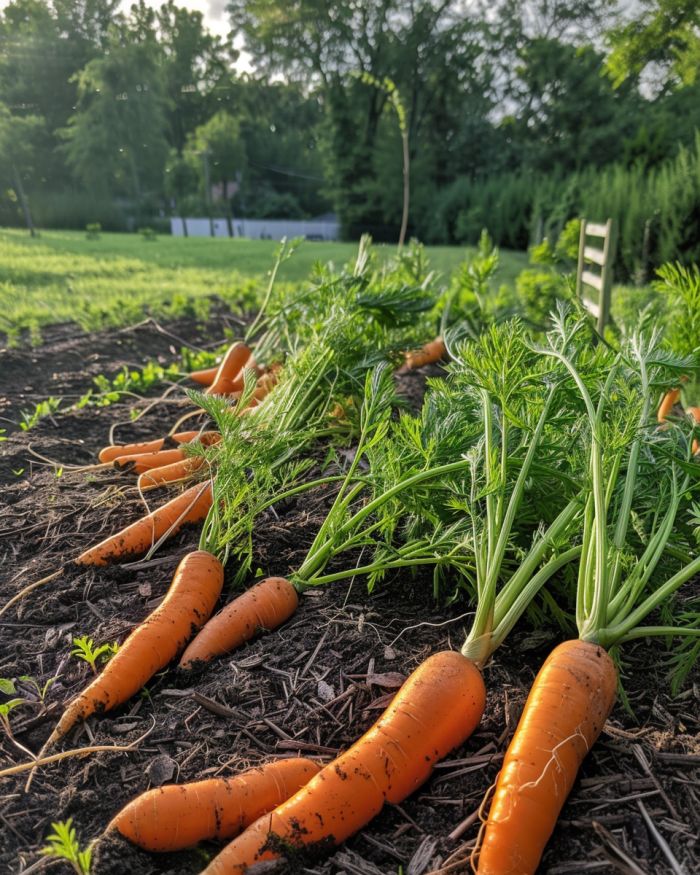
Ditch the Store-Bought Carrots: 10 Tricks for a Plentiful Carrot Harvest
By [Your Name]
There’s something incredibly satisfying about pulling fresh, crisp carrots straight from your own garden. Not only do homegrown carrots taste sweeter and earthier than store-bought ones, but they’re also free from unnecessary chemicals and packaging.
But let’s be honest—carrots can be tricky to grow perfectly. If you’ve struggled with stubby, split, or bitter roots in the past, you’re not alone. The good news? With the right approach, you can grow beautiful, bountiful carrots that will make you forget the produce aisle altogether.
Here are 10 proven tricks to help you ditch the store-bought carrots for good and enjoy a thriving harvest right from your backyard.
🥕 1. Choose the Right Variety for Your Soil
Not all carrots are created equal. If you’re working with heavy clay or shallow soil, choose shorter or round varieties like ‘Parisian’ or ‘Thumbelina.’ For deep, loose soil, go for long-rooted types like ‘Danvers’ or ‘Nantes.’
Tip: Always read the seed packet to match variety with your garden conditions.
🌱 2. Prepare Deep, Loose Soil
Carrots need room to grow straight and long. Compacted or rocky soil leads to stunted, misshapen roots.
Till soil to at least 12 inches deep
Remove rocks and clumps
Mix in sand or compost to improve drainage and texture
🌞 3. Plant in Full Sun
Carrots need 6–8 hours of direct sunlight per day. Shadier areas may cause slow growth and weak roots. Find a sunny spot, and your carrots will thrive.
📅 4. Time It Right
Carrots grow best in cooler weather. Plant in early spring (2–3 weeks before the last frost) and again in late summer for a fall crop. Avoid mid-summer planting in hot climates, which can cause bitterness.
💧 5. Keep Soil Consistently Moist
Carrots need regular watering—especially during germination. Dry soil can cause poor sprouting or split roots.
Watering tip: Use a fine mist or gentle watering to avoid disturbing the shallow seeds.
🌿 6. Thin the Seedlings (Don’t Skip This!)
It’s tempting to let them all grow, but overcrowding = skinny, underdeveloped carrots.
Once seedlings are 1–2 inches tall, thin them to about 2 inches apart
Be gentle to avoid disturbing the roots of nearby plants
🍂 7. Mulch to Keep Cool and Suppress Weeds
Carrots love cool soil. A layer of organic mulch (like straw or shredded leaves) helps maintain moisture, keeps soil temperature down, and blocks weed growth.
🚫 8. Avoid Over-Fertilizing
Too much nitrogen = bushy tops and small, forked roots. Stick to a balanced or low-nitrogen fertilizer, or just amend soil with compost before planting.
🐞 9. Watch Out for Pests and Diseases
For Complete Cooking STEPS Please Head On Over To Next Page Or Open button (>) and don’t forget to SHARE with your Facebook friends
ADVERTISEMENT
