
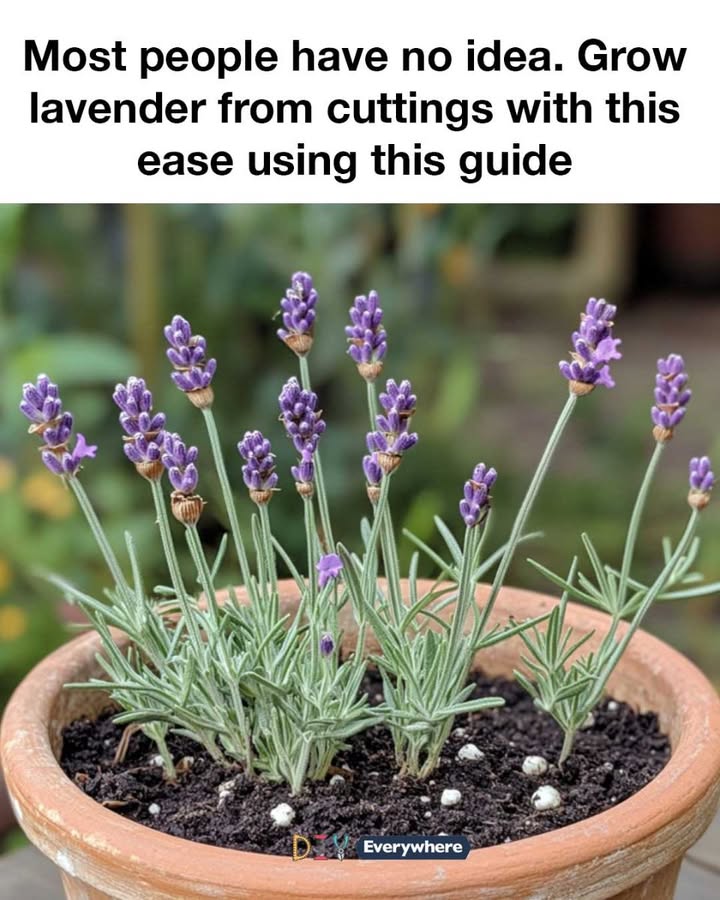
Most People Have No Idea: Grow Lavender from Cuttings with This Simple Guide
No green thumb required — just follow these easy steps and enjoy fragrant, thriving lavender in no time.
Lavender is beloved for its calming scent, stunning purple blooms, and powerful pollinator-attracting properties. Whether you want to line your garden with it, dry it for DIY projects, or simply enjoy the aroma on your windowsill, lavender is one of those plants that looks and smells like a dream.
But here’s what most people don’t know: You don’t need to buy new lavender plants every season. You can easily grow more lavender from cuttings — saving money and expanding your garden with plants you already love. No fancy greenhouse or expert gardening skills required.
🌿 Why Propagate Lavender from Cuttings?
Faster than growing from seed
True to the parent plant (unlike seeds, which can be unpredictable)
More cost-effective than buying new plants
Highly rewarding and surprisingly simple!
✂️ What You’ll Need
A healthy mature lavender plant
Clean, sharp garden shears or scissors
Small pots or containers
Potting mix (preferably well-draining or a cactus/succulent blend)
Rooting hormone (optional but helps speed up rooting)
Clear plastic bag or dome for humidity (optional)
Spray bottle with water
🌱 Step-by-Step Guide to Grow Lavender from Cuttings
1. Choose the Right Time
The best time to take lavender cuttings is in late spring to early summer, when the plant is actively growing but not yet flowering.
2. Take a Cutting
Select a non-flowering stem that’s about 4–6 inches long.
Use clean scissors to cut just below a leaf node (the point where leaves attach to the stem).
Strip the bottom 2 inches of leaves, leaving only the top set of leaves.
3. Prepare for Planting
Dip the cut end into rooting hormone (optional, but improves success rate).
Fill a small pot with moist, well-draining soil.
Make a small hole and insert the cutting about 2 inches deep.
Gently press the soil around the stem to hold it in place.
4. Create a Mini Greenhouse (Optional)
Cover the pot with a clear plastic bag to trap humidity — just make sure it doesn’t touch the leaves.
Place in a warm, bright location with indirect sunlight (avoid harsh afternoon sun).
5. Water Lightly and Wait
Mist the soil lightly when it starts to feel dry.
Avoid overwatering — lavender hates soggy roots.
Roots should begin forming within 2–4 weeks.
6. Transplant Once Rooted
Tug gently after a few weeks — if you feel resistance, roots have formed.
Transplant into a larger pot or directly into your garden once well established.
For Complete Cooking STEPS Please Head On Over To Next Page Or Open button (>) and don’t forget to SHARE with your Facebook friends
ADVERTISEMENT
