
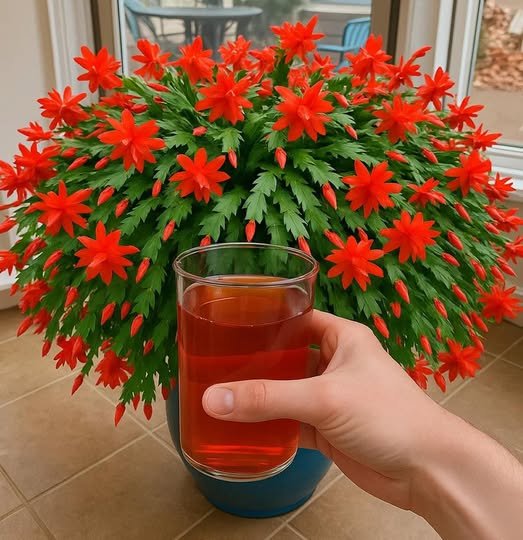
For about 4–6 weeks, give the plant 12–14 hours of complete darkness every night. You can move it to a dark room, closet, or cover it with a box.
✅ Lower the Temperature
Keep it in a space where nighttime temps are 50–60°F (10–15°C). Cool temperatures signal to the plant that it’s time to flower.
✅ Limit Watering
During this phase, reduce watering slightly — just enough to keep the soil from going bone dry.
Once you see buds forming (usually within a few weeks), move the plant back to a bright area and resume normal care.
💡 3. Light, But Not Too Much
After blooming begins, your Christmas cactus needs bright, indirect light to support flower development — but avoid direct sunlight, which can scorch the leaves and stress the plant.
Ideal spot? Near an east- or north-facing window.
💧 4. Water the Right Way
Overwatering is one of the biggest mistakes people make with this plant.
Water when the top inch of soil feels dry
Always use well-draining soil
Never let the pot sit in standing water
During blooming season, the plant may need a bit more water, but always let the soil guide you — not the calendar.
🌿 5. Feed for Flowers
Fertilizing your Christmas cactus the right way can help fuel more blooms.
Use a balanced houseplant fertilizer (like 20-20-20) monthly from spring to early fall
Once buds start forming, switch to a bloom booster fertilizer (higher in phosphorus)
Stop feeding once flowering is done to give the plant a rest.
✂️ 6. Prune After Blooming
Believe it or not, a little haircut can encourage more growth — and more places for future blooms.
After blooming ends, pinch back the stems by a segment or two. This promotes branching and a fuller plant, which equals more flower potential next time.
🪴 7. Repot Every Few Years
A root-bound Christmas cactus may still bloom, but giving it fresh soil and a little more room can work wonders.
Repot every 2–3 years, preferably in spring
Use a cactus/succulent mix or regular potting soil with added perlite
Choose a pot with good drainage holes
📅 Bonus Trick: Plan for Multiple Blooms a Year
With good care and timing, you can repeat the dark + cool treatment every few months to try and encourage a second (or even third) bloom cycle.
Aim for:
Main bloom: November–December
Second bloom: Late February or early March
Bonus bloom: Sometimes again in summer if happy!
The key is giving the plant time to rest and recover between bloom cycles.
Final Thoughts
The Christmas cactus is far from a one-season wonder. With just a little planning and a few tweaks to its environment, you can enjoy those stunning flowers multiple times a year.
So don’t just wait for December — take control of the bloom cycle and let your Christmas cactus surprise you all year long.
After all, who says holiday beauty should only happen once a year?
ADVERTISEMENT
